Line arrangement decides whether sampling gets squeezed out
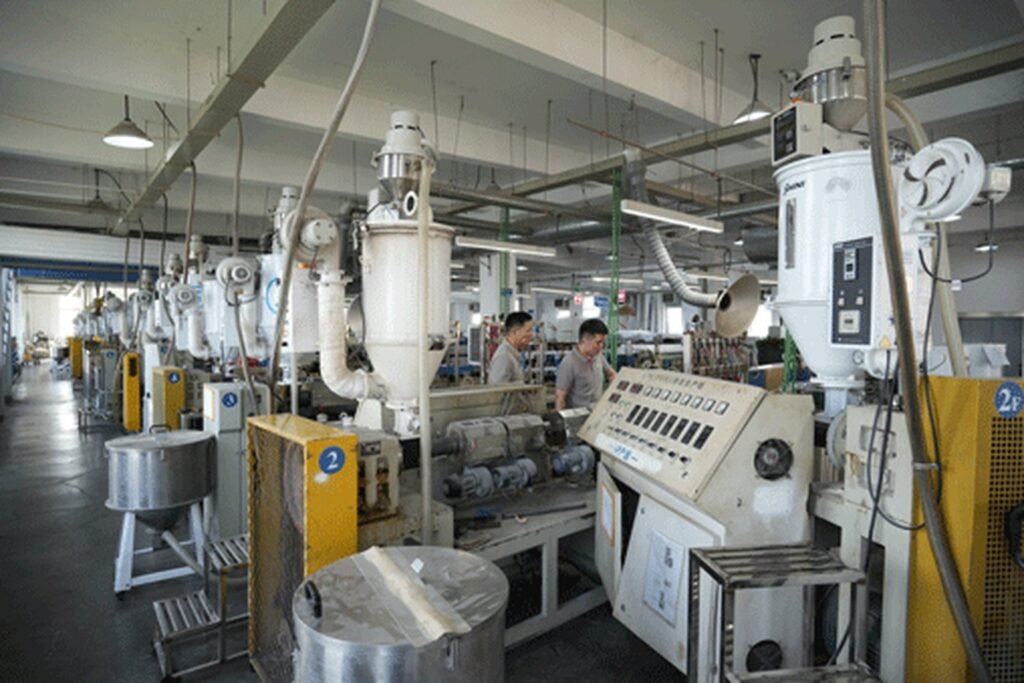
In our extrusion hall, several lines run side by side, each machine carrying a number, temperature control cabinets standing next to their machine, and profiles travelling from the die head into the vacuum sizing tank and then through the haul-off. The value of that arrangement is scheduling, not appearance: while one line runs a sampling trial, production orders keep moving on the others.
A plant with one or two lines cannot do that. Every trial shot means idling a production line, so in a busy season sampling waits its turn. That is usually the real explanation for “the drawing is approved, but samples never seem to come” and it has nothing to do with the drawing.
Machine numbers are the start of traceability
The machines in the photos carry number plates. It looks like a housekeeping detail. It is the first link in the traceability chain: the production order records the machine number, process parameters hang off that number, and a problem can be traced back to a specific machine and shift.
Worth asking on a visit: can the shipping record tell me which machine made this batch? A vague answer usually means the number is painted on the machine but never entered anywhere.
How far the die racks are from the line
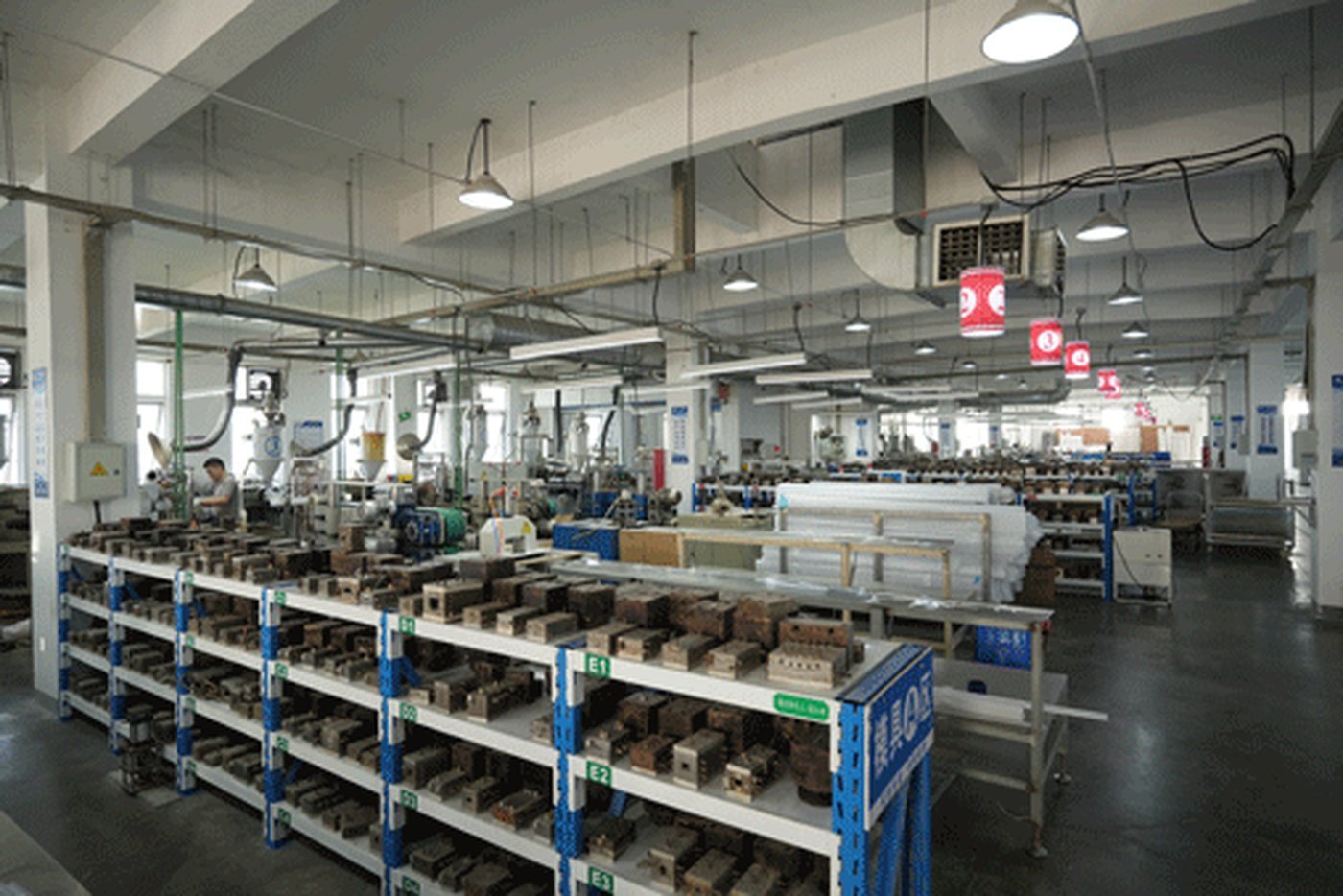
The wider view of the workshop shows die racking sharing the same hall as the work stations and the lines. When the tooling library sits next to production, a repeat die travels from rack to die head in minutes instead of being transferred between plants.
For a buyer that translates into one thing: your repeat order can be slotted in. Where dies are stored elsewhere or lent out, a repeat order starts with logistics, and the lead time carries that cost. The tooling arrangement is worth understanding before you approve a die.
Four places worth standing still on a visit
- In front of the die head. Watch the profile as it emerges: whether the surface is even, whether flow lines or vibration show. A slow demo run on a cold line can hide a lot, so ask to see conditions close to real production.
- Between the sizing tank and the haul-off. This is where dimensions and straightness are fixed. Check that the tank is actually running with water temperature and vacuum readings, and that the belt pull looks steady.
- At the die racks. Look at the zoning and labelling, then ask how an older die is called up. It is the fastest way to judge repeat-order capability, and it pairs with the manufacturing process you are relying on.
- At the inspection station. Gauges should carry IDs, and records should show continuous entries. A logbook with unbroken rows at fixed intervals looks very different from one filled in the week you announced your visit.
The part of the workshop you cannot see
A walk-through shows machines, layout and housekeeping. It does not show data. On two identical lines, parameters either live on the production order or only on the machine controller, and the outcomes differ: one can be traced and reproduced, the other changes character with whoever starts the machine.
So finish the visit in the office and ask for a sample production order. The hall shows the ceiling of what a plant can do; the paperwork shows the level it works at every day. How the hall came to be built, from the Yuhang years to the single-site move to Deqing, is told in the company story. If you want your own profile assessed against that, request a quote and ask for the quality control documents for the closest section we already run.