Why tooling separates suppliers more than extruders do
An extrusion line is a catalogue item. Any factory with the budget can buy one, and the equipment supplier will help commission it. The work that matters on an optical part happens inside the die: diffusion, prismatic structure, micro-structured surfaces, wall transitions and snap-fit geometry all sit in the tooling.
Tooling does not arrive overnight. A line is delivered in months; a mature optical die carries design decisions, machining steps and a history of trial shots behind it. The die is also the step that sets how a profile behaves in extrusion, not just how it looks on a drawing. Two suppliers can hand you identical equipment lists and still produce very different profiles. When you walk a plant, the machine hall takes ten minutes. The tooling side is where the half hour belongs.
What an in-house die and mold center changes
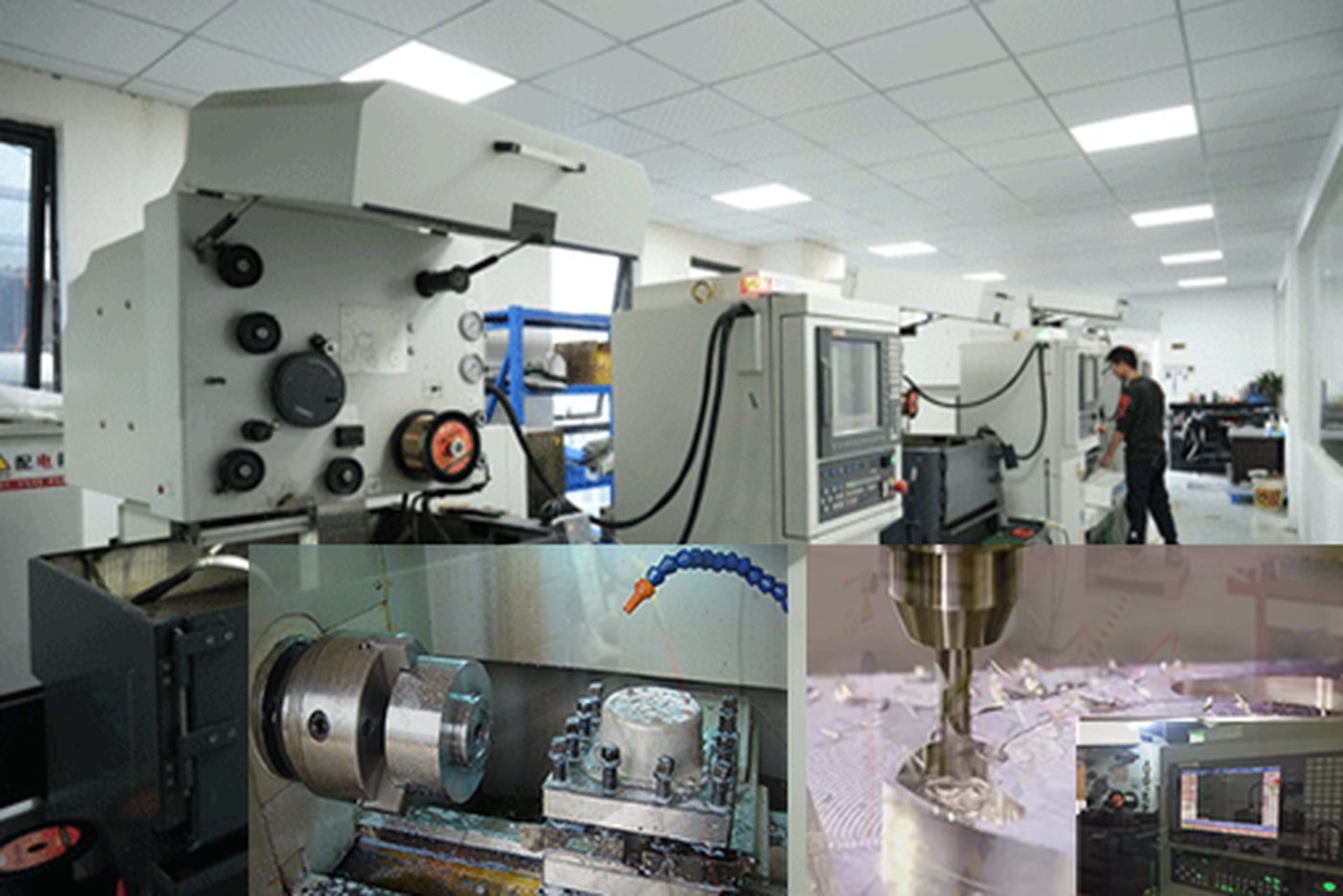
Our die and mold center runs CNC machining centers and turning and milling operations under the same roof as the extrusion lines. For a buyer, that shows up in three situations:
- Modification does not queue behind someone else’s schedule. After sampling you send comments, and the die goes back on a machine in the same plant. With an outsourced die, every round means transport, another workshop’s queue and a trip back, days that add up to weeks across three rounds.
- Trial and correction happen in one place. If a trial shot shows poor filling or a surface defect, the die comes off, gets corrected and goes back on the same day. The toolmaker and the line operator talk to each other instead of through a purchase order. See how a custom LED diffuser is designed for the stage where this matters most.
- Your drawing stays inside one company. Cross-section geometry, parting line and snap-fit details do not travel to a third-party tool shop. If you are sampling against a customer drawing, this is the clause worth having in writing.
The tooling library: why repeat orders match the first batch
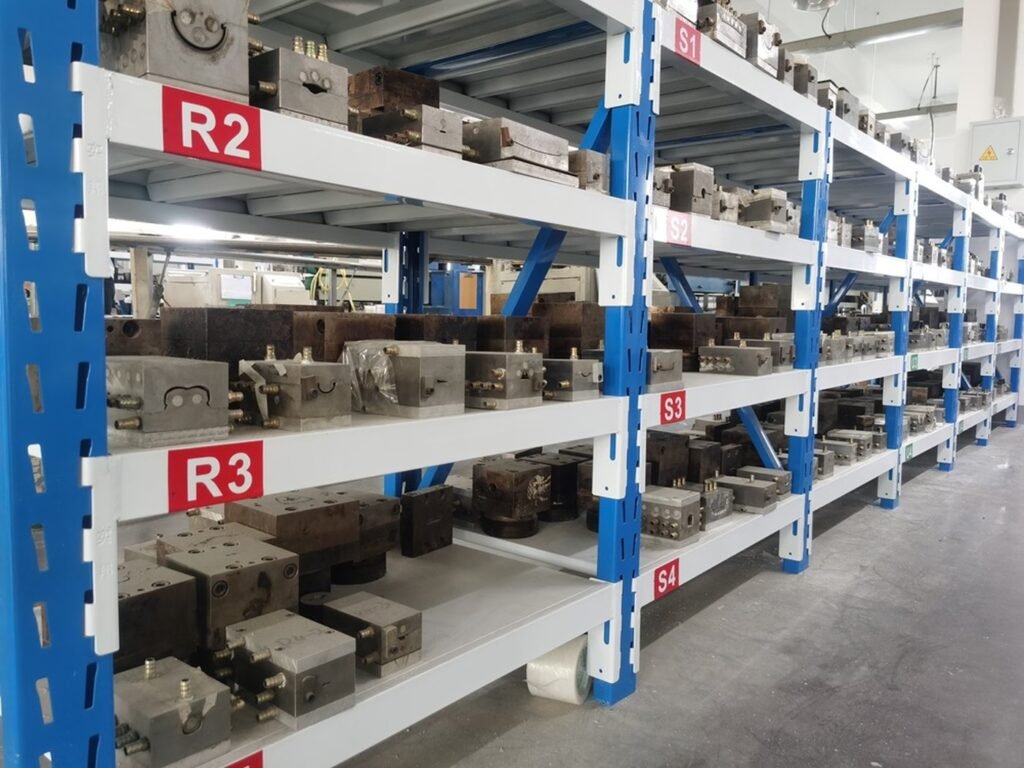
The tooling library is worth a look on its own. Dies are stored on heavy racking arranged by zone and index, each one with its water connections intact, and each one tied back to a drawing and a set of process parameters that already produced an approved part.
That is the reason a repeat order matches the original. Six months later the die comes off the shelf, the first piece lands where the approval sample did, and nobody has to rediscover the settings. A factory without that record starts a repeat order as a fresh development and spends two or three sampling rounds getting back to where it was. The water circuit condition is worth checking too, since most optical dies are water cooled and neglected circuits shorten die life and roughen the profile surface.
Five questions before you release tooling
- Is die design and machining done in-house or subcontracted, and whose schedule does a modification follow?
- Which line runs the trial, and does first-piece approval cover dimensions only or dimensions plus optical behaviour?
- How are dies indexed, and can a repeat order call up the original die years later?
- Who owns the drawing and the die, and where is confidentiality written down?
- Who maintains the die between runs: water circuits, die lips, parting faces, and how often?
None of these need to be fired off in one email. Ask them while standing at the tooling racks, and the answers are visible in the racking itself. Machine counts are easy to quote; tooling capability has to be seen, and it is also what your lead time depends on. If you have a profile in mind, send the drawing or start from request a quote.