Why “sample approved” is not “production approved”
A sampling batch is watched by people. There are a handful of parts, the best ones get measured, and the optical readings are compared against the customer’s approval sheet. Production arrives as boxes on pallets, and nobody is picking through them piece by piece.
That makes the first production delivery the moment that sets the standard for everything after it. What you measure and record this time becomes the acceptance practice for the rest of the project. Approve it with a single line saying “appearance OK” and tightening the criteria later turns into a negotiation, because the supplier can point at what you already accepted.
The dimensions worth putting on that form are the ones covered in LED diffuser tolerance: width, seating faces, wall and snap-fit geometry.
What the factory side already holds
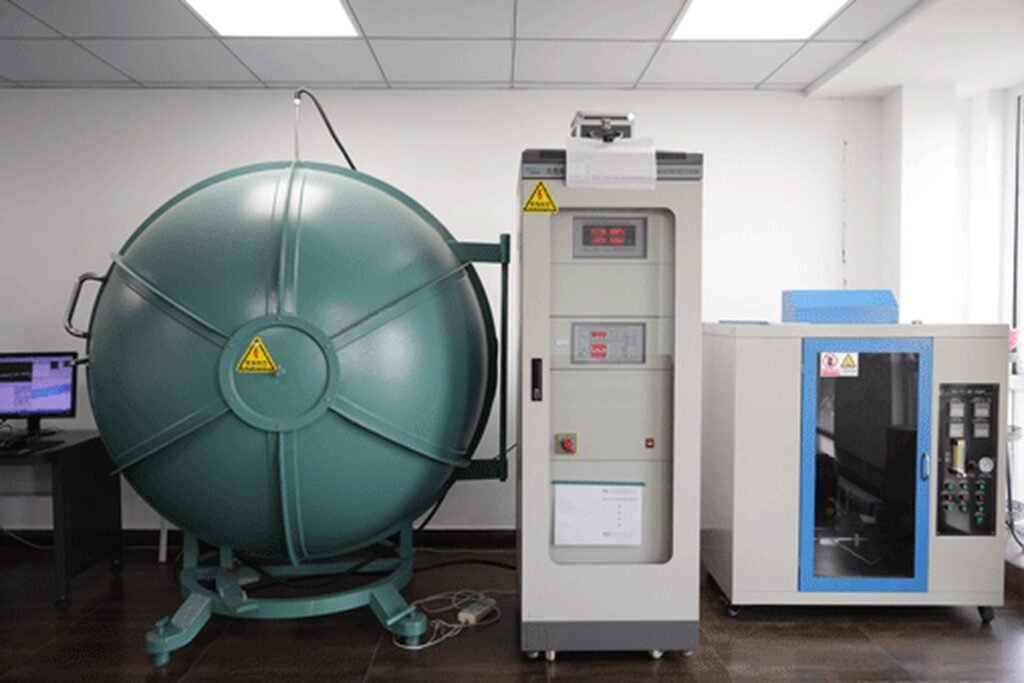
Our testing equipment includes an integrating sphere, so transmittance and efficacy come from an instrument rather than an opinion. On the production side, every production order carries its drawing number and machine number, the inspection columns are filled in at fixed intervals through the run, key dimensions are recorded as values against upper and lower limits, weight is logged, and entries carry the name of whoever entered and approved them.
Put those together and you have a chain of evidence: the part number matches the drawing, the batch matches the machine, the data matches a time. Incoming inspection is mostly a matter of plugging your own process into that chain, which is also how a consistent batch is proven rather than promised.
Three steps, in this order
- Appearance and packaging first. Check the carton for crush damage, then the surface: flow lines, scratches, whether the brushed finish reads evenly, how clean the cut ends are, any visible black specks. No instruments needed, but photograph everything.
- Dimensions second. Measure the dimensions your drawing actually carries a tolerance on, especially the ones that decide assembly: overall width, seating height, snap-fit features. Use gauges with an ID and a valid calibration date, and write the measured number on the form instead of “OK”.
- Light last. Where you can, light the profile in a finished luminaire and look for a visible LED image, shadow bands and colour patches. Without photometric equipment, measure transmittance and haze and compare against the approved range. The difference between a frosted and a clear, smooth surface reading is covered in clear vs frosted LED diffusers.
Reverse the order and the usual outcome is predictable: the lit sample looks fine, the goods go into stock, and the problem only shows up when the line tries to assemble them.
Retention samples: three is enough, if they are the right three
- The approval sample, signed by the customer and bagged, is the reference for every argument afterwards.
- The first piece of the delivery, drawn at random, is what you compare against the approval sample.
- The last piece of the delivery shows how far the batch drifted within itself, which is where colour and yellowness questions usually start.
Label all three with part number, batch and arrival date, and keep them somewhere dry and dark. If a repeat order is discussed in three years, this box settles more questions than any email thread.
An incoming inspection form you can copy
| Item | What to record | Judged against |
|---|---|---|
| Packaging and marking | Carton condition, part number, drawing number, order number, batch | Supplier shipping records |
| Appearance | Flow lines, scratches, bubbles or specks, cut quality | Approval sample, photographed |
| Dimensions | Measured values for key dimensions | Tolerances on the drawing |
| Weight | Piece weight or weight per metre | Approved range |
| Optical | Transmittance and haze, or lit appearance | Customer approval sheet |
| Retention | Approval, first piece, last piece | Bagged, signed, logged |
Ask for the records, do not rebuild them
Before the first delivery lands, three requests are reasonable: outgoing inspection records provided per batch, optical figures with the instrument identified, and traceability back to the production order and machine for any problem.
Where a flammability rating is part of the specification, ask for the report reference rather than the claim; the UL 94 guide sets out which documents to request.
None of that is demanding. The production process system already records data against order and machine, so the supplier can produce it on request. If you want the inspection sheet from a comparable section before your own order even starts, request a quote and ask for it alongside.