Nothing in the approval process catches yellowing. The samples look perfect, the photometrics pass, the container ships, the invoice is paid. Then the fixture has been running eighteen months in a warehouse or a coastal lobby, and the maintenance team photographs a cover that has gone visibly amber while the neighbouring units from another batch are still fine.
By then the arguments start: the resin, the stabiliser package, the driver temperature, the cleaning chemical, or just one part of the batch that sat longer than the rest. LED diffuser yellowing usually has several contributors at once, and the reliable defence is a specification written before tooling.
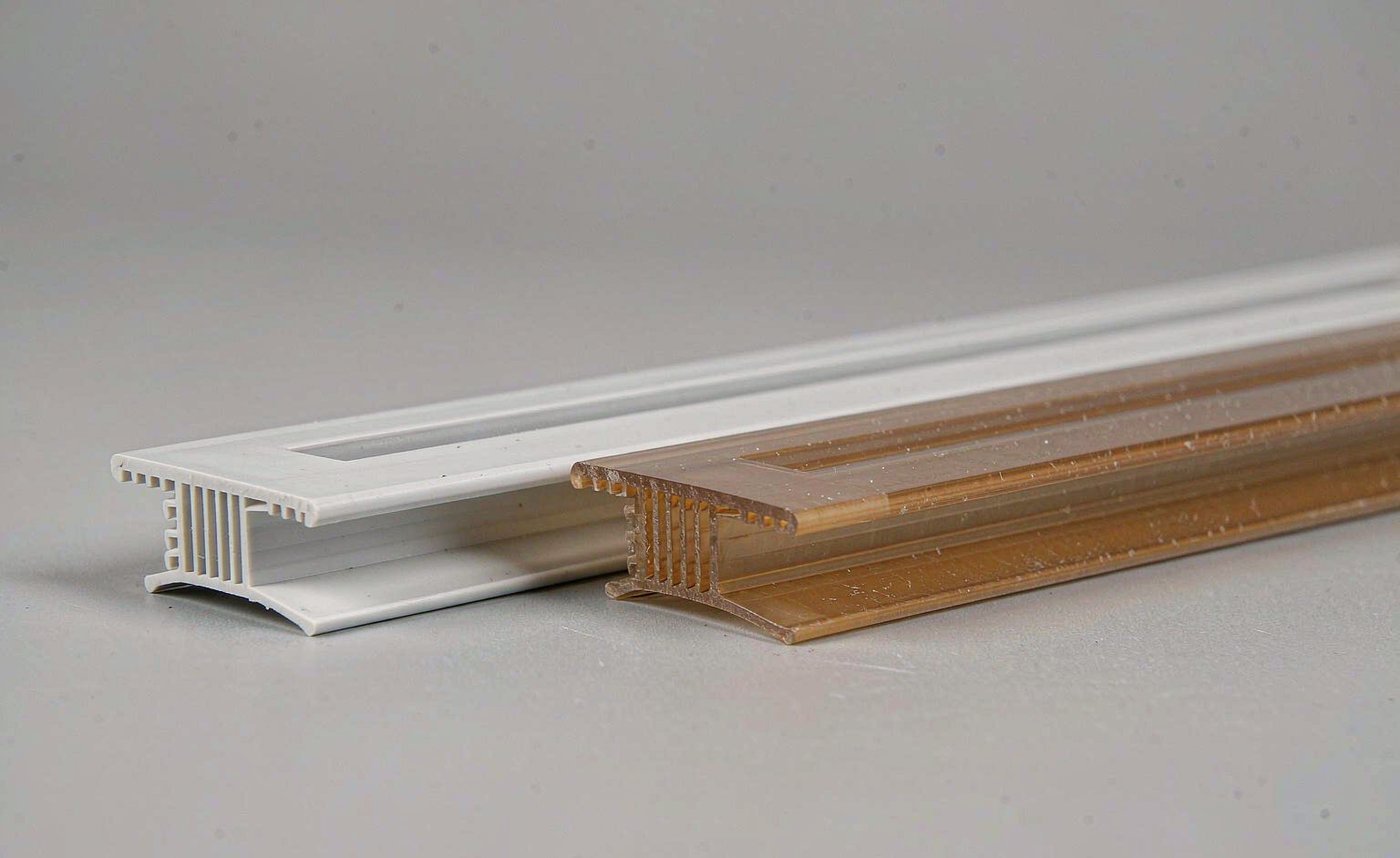
What yellowing actually is
Yellowing starts in the polymer chains. They absorb energy from ultraviolet photons and from heat, and when a bond breaks the fragments reorganise into structures called chromophores, which absorb blue light. Take the blue out of the transmitted spectrum and the light shifts warm: the part looks yellow and reads darker.
Two things make it visible long before the material actually degrades:
- Transmission loss. A few points of absorption in the blue range costs measurable lumens, so the fixture slowly misses the output it was certified for.
- Colour shift. Eyes detect ΔE differences between adjacent units far sooner than they detect absolute brightness change. A row of covers that have aged differently looks like a quality failure even when all of them still pass an output check.
The four accelerators
Yellowing needs energy and time. Manage these four inputs and you control most of the outcome:
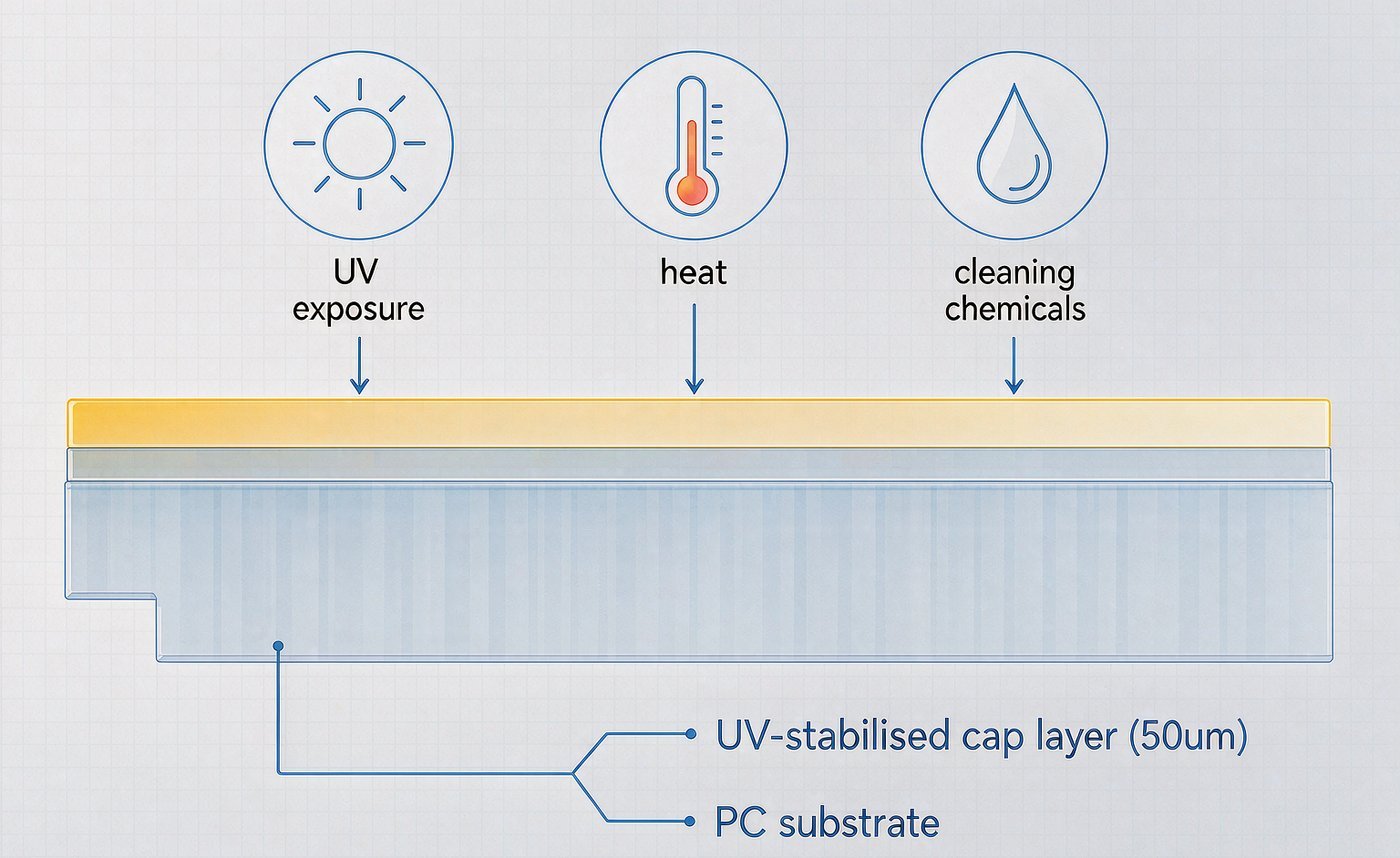
- UV exposure. Direct sunlight through glazing, and even short-wavelength output from the LEDs themselves, drives photo-oxidation. This is why polycarbonate is normally specified with a UV-stabilised grade or a cap layer for anything near a window.
- Heat. Degradation rates roughly climb with temperature. A cover sitting over a high-power board at elevated junction temperature ages much faster than the same cover in a low-power application, which is why high-bay and industrial lighting are where failures concentrate.
- Drive conditions. Over-driving LEDs raises both board temperature and short-wavelength output. It is a common root cause when a “known-good” cover yellows in one fixture but not another.
- Chemicals. Ammonia-based cleaners, some sealants and certain flame-retardant or PVC-adjacent materials can attack PC surfaces, producing haze and discolouration that looks identical to UV damage but follows the cleaning schedule instead of the sun.
Why PC and PMMA behave differently
The two resins age along different paths, and that difference matters more than any transmittance figure on a datasheet. PMMA resists UV better and tends to hold its colour; polycarbonate brings impact strength and higher heat resistance but needs a stabiliser package or a co-extruded UV cap to survive long exposure. The full comparison is in our PC vs PMMA for LED lighting article. The point that matters here: PC relies on additives, so how it ages is a supply chain question as much as a resin question.
That also means two PC samples with identical initial transmittance can age very differently. Same base polymer, different stabiliser loading, very different year-two appearance. If initial optical numbers are all you compare, you will not see it coming.
Where failures show up first
Experience across applications points consistently at the same environments:
| Environment | Dominant stress | What it looks like in the field |
|---|---|---|
| High-bay industrial | Heat + long burn hours | Ambering from the centre outward, correlated with driver temperature |
| Coastal / atrium lobbies | Sunlight through glazing | Selective fading, only units inside the daylight zone |
| Retail display cases | Blue-rich output + long daily runtime | Gradual warm shift, visible against new replacement units |
| Food & clean areas | Cleaning chemicals | Patchy haze following the wiping pattern, not the light pattern |
What to specify before tooling
This is the part that actually prevents arguments. Ask for these items in writing, on the drawing or in the agreed specification:
- Resin grade and stabiliser approach, named specifically rather than “UV-stabilised PC”.
- Co-extruded cap layer if the application has meaningful daylight or high UV load.
- Accelerated weathering method and duration: QUV per
ASTM G154, or xenon-arc where daylight simulation matters. Name the standard so results are comparable between suppliers. - Acceptance criteria in the units you will enforce: yellowness index change (
ASTM E313/D1925), colour shift ΔE, and retained transmittance percentage after the agreed exposure. - Wall thickness tolerance. A cap layer that is nominally 50 µm but varies widely across the profile protects the thin spots last, and that is exactly where yellowing starts.
- Batch traceability so that a field claim three years later can be tied back to a resin lot and a production date.
A practical caveat on numbers: sensible starting points are widely used in the industry, but the pass level should reflect the actual application and be confirmed against your own lab or a third-party report. Writing “no visible yellowing” into a spec is an argument waiting to happen, not an acceptance criterion.
Field-side practices that reduce returns
- Specify the cleaning regime. Most chemical damage traced back to the optics is a maintenance instruction problem, not a materials problem.
- Control heat at board level. Moving the cover further from the LED board often costs less than upgrading every cover to a higher-grade resin.
- Keep spares from the same batch. Colour-matched replacement units prevent the oldest complaint in the book: a new cover installed next to an aged one.
Turning this into a durable product
Yellowing comes down to UV load, temperature, chemistry and time, and all four can be handled at the specification stage for less than one replacement shipment costs. Baoming Optical extrudes UV-stabilised PC LED diffusers with optional co-extruded cap layers, and our quality control process tracks optical values by batch. For a project with daylight exposure, high ambient temperature or a long warranty clause, send the drawing and a description of the environment through request a quote, and we will quote against a written acceptance criterion instead of a datasheet claim.