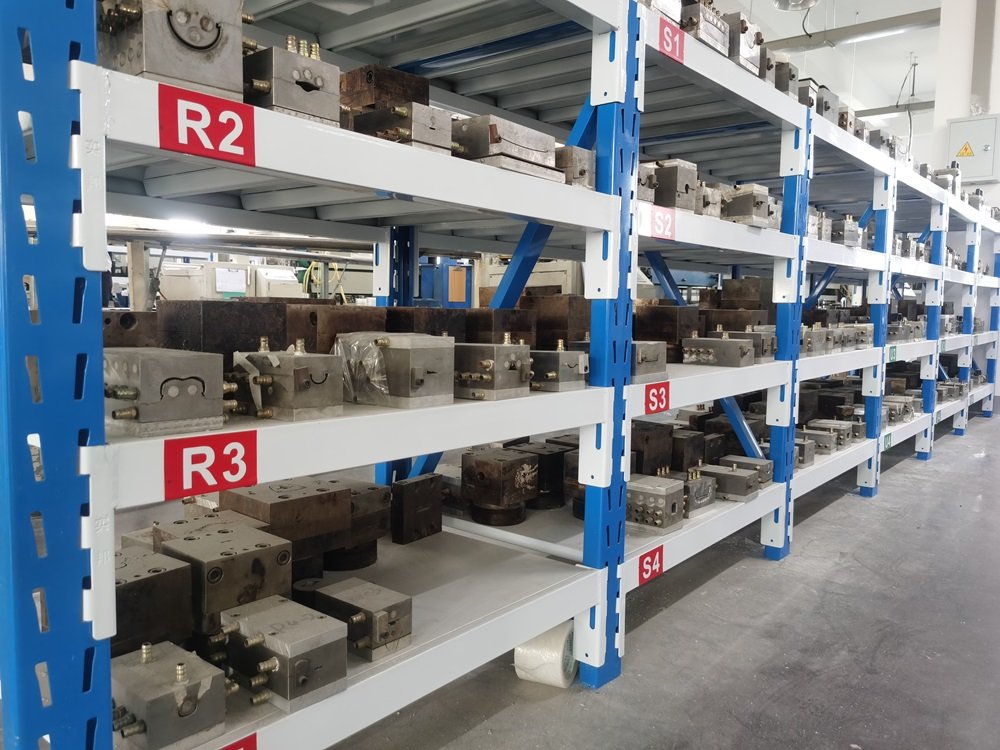
A custom diffuser is a tooling project as much as a design project. These are the decisions that determine whether a profile runs cleanly and costs what you expect.
Start with the function, not the shape
Write down what the profile must do: hold a snap-in fixing, hide the LED pitch, meet a glare limit, survive an impact, or seal against dust. The cross-section follows from those requirements.
Keep wall thickness even
Large variations in wall thickness are the most common cause of a profile that will not hold its shape. Where thickness must change, use gradual transitions and generous radii.
Choose material before finalising geometry
Polycarbonate and PMMA flow differently, so a section designed for one may need adjustment for the other. Confirm the material before the drawing is frozen.
Specify the optical target
Transmission, diffusion and — for lenses — the beam angle should be written into the specification. These are set before the die is cut and then held to the approved sample in production.
What to send
A 2D cross-section or 3D file, the material, the optical target, the colour and finish, the length, the application and the expected quantity. A dimensioned sketch or a physical sample is enough to start a conversation.
Related products and applications
Need this profile made to your drawing?
We extrude PC and PMMA diffusers, covers and lenses from your drawing, sample or photometric target. Tooling is developed in-house.
Frequently asked questions
How long does a custom profile take?
Tooling development, prototyping and production depend on the complexity of the section; a schedule comes with the quotation.
Who owns the tooling?
Tooling is developed and held in our tooling centre for your programme; ownership terms are agreed in the quotation.