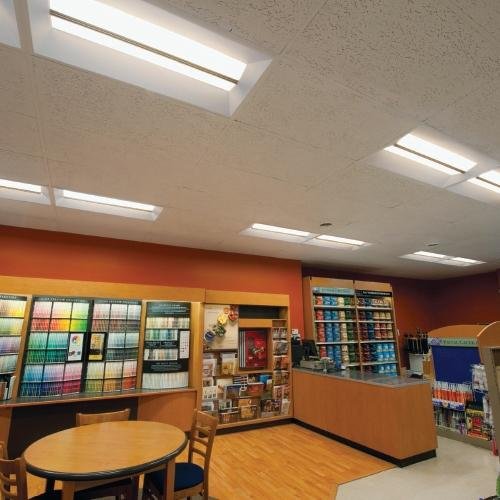
Architectural projects judge a diffuser on how it looks when the light is off and how it looks years later. That changes both the material and the geometry.
Appearance is part of the specification
In a cove, reveal or facade detail the profile is visible in daylight. Colour, gloss and edge quality are design decisions, not finishing details.
Long-term colour stability
PMMA is the usual starting point because of its clarity and very good UV stability with low yellowing. Polycarbonate is used where impact or temperature rules acrylic out, with UV-stabilised grades.
Custom geometry
Architectural details rarely match a standard section. Because die design and die manufacturing are in-house, irregular and asymmetric profiles can be developed and corrected without a long external loop.
Where it is used
Cove and reveal lighting, wall-wash and grazing, facade detailing, feature ceilings and decorative exposed runs.
Related products and applications
Need this profile made to your drawing?
We extrude PC and PMMA diffusers, covers and lenses from your drawing, sample or photometric target. Tooling is developed in-house.
Frequently asked questions
Which material suits architectural work?
Usually PMMA for clarity and UV stability; polycarbonate where impact or temperature matters.
Can you match a building detail?
Yes. Send the section or a sketch and we will advise what is producible before tooling starts.