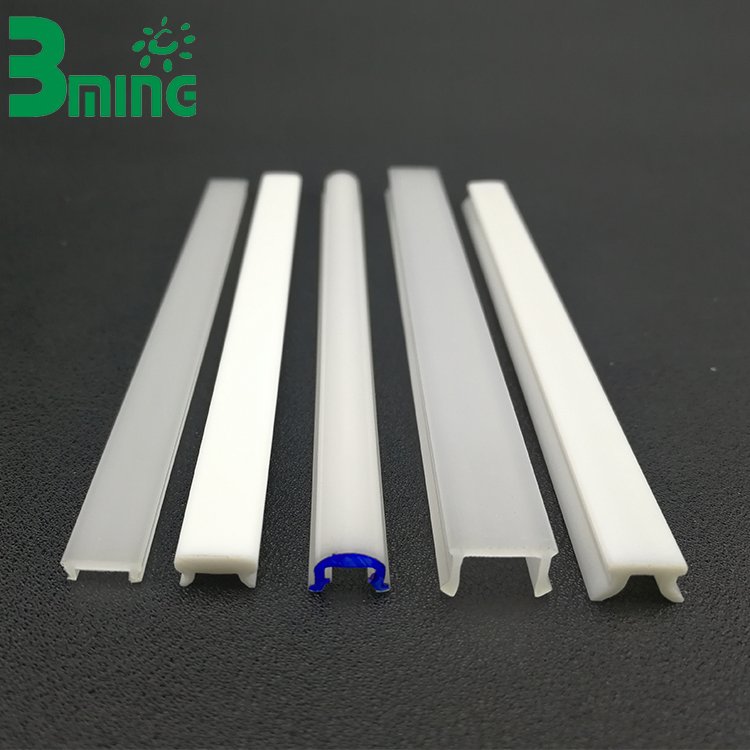
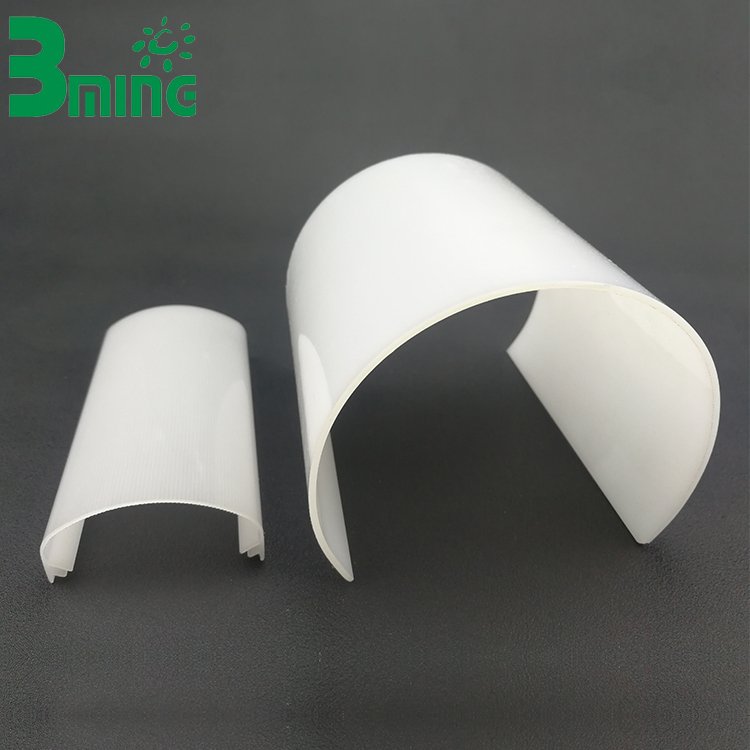
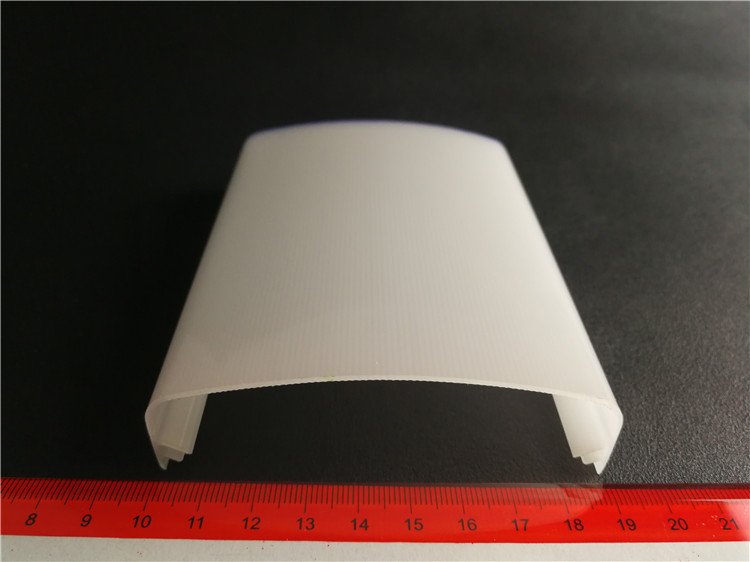
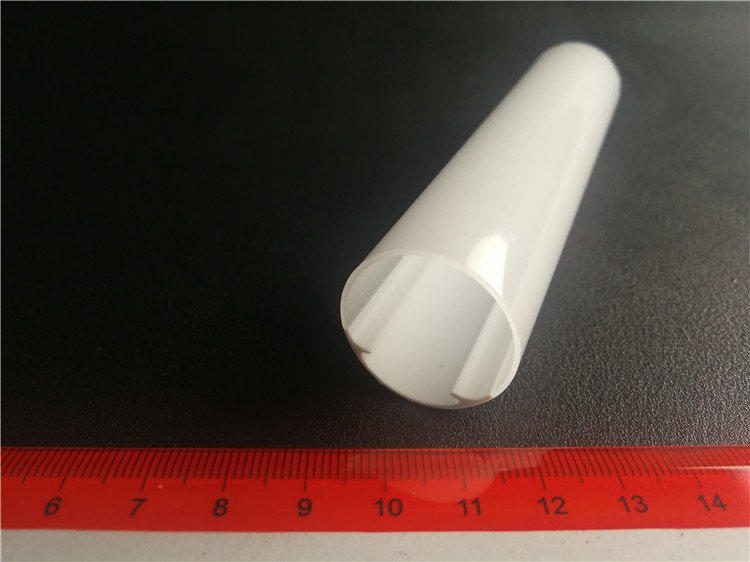
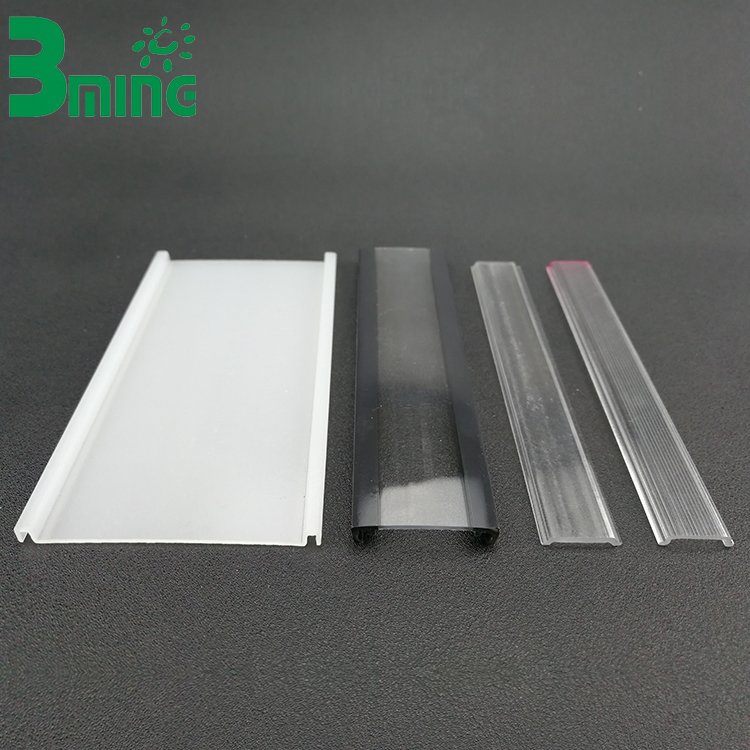
PMMA / Acrylic LED Diffusers
Acrylic for clarity, surface hardness and long-term colour stability.
Material
Why PMMA
PMMA, commonly called acrylic, is chosen where clarity, surface hardness and long-term colour stability come first. It resists yellowing well, which is why it is the standard for architectural interiors and outdoor signage, and it takes a hard, scratch-resistant finish. Its impact strength is lower than polycarbonate.
Comparison
PMMA vs polycarbonate
| Polycarbonate (PC) | PMMA / acrylic | |
|---|---|---|
| Optical characteristics | Very good transmission, slightly higher haze | Excellent clarity, low haze |
| Impact resistance | Very high | Moderate |
| Surface finish | Good; softer surface needs careful handling | Hard, scratch-resistant surface |
| Appearance | Slightly warm tint | Water-clear |
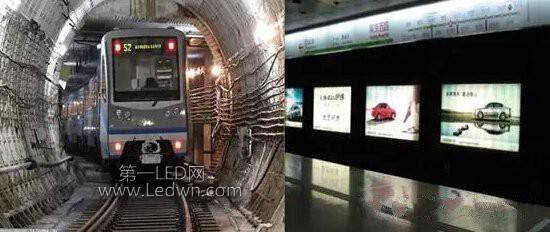
| Typical applications | Industrial, outdoor, vandal-resistant | Architectural, commercial, signage |
| Customization | Profile, colour, surface, two-colour | Profile, colour, surface, two-colour |
Gallery
Production and profiles


Need a diffuser built to your drawing?
Send us your drawing, sketch or existing sample. Our optical extrusion engineers will come back with material, tooling and price.
FAQ
Frequently Asked Questions
Is PMMA the same as acrylic?
Yes. PMMA is polymethyl methacrylate; acrylic is the common trade name.
Does acrylic yellow over time?
PMMA has very good UV stability and low yellowing compared with many transparent polymers.
RFQ
Request a Quote
Tell us the profile, the material and the quantity you need.