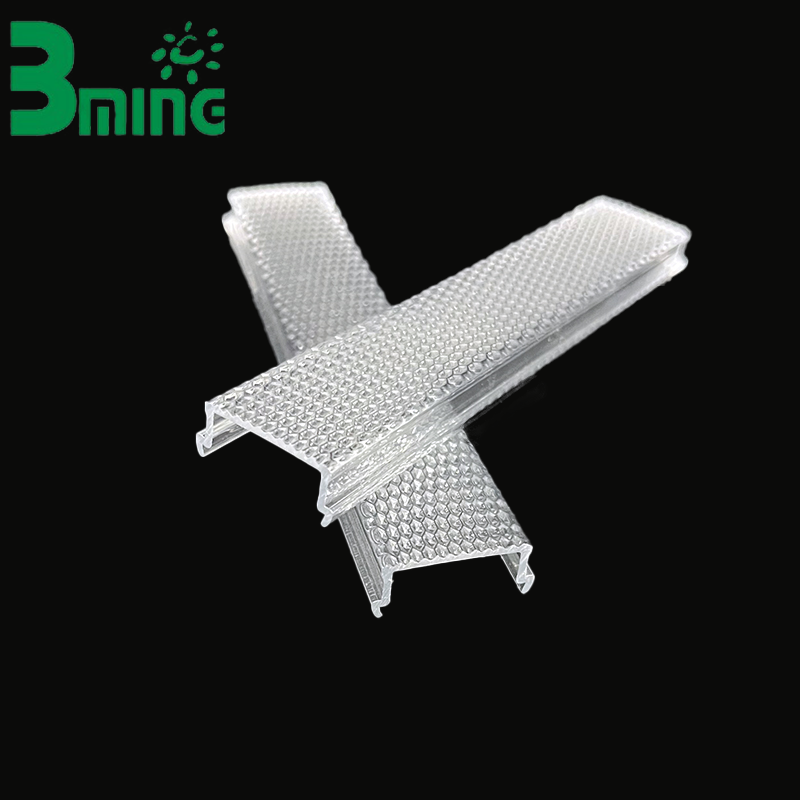
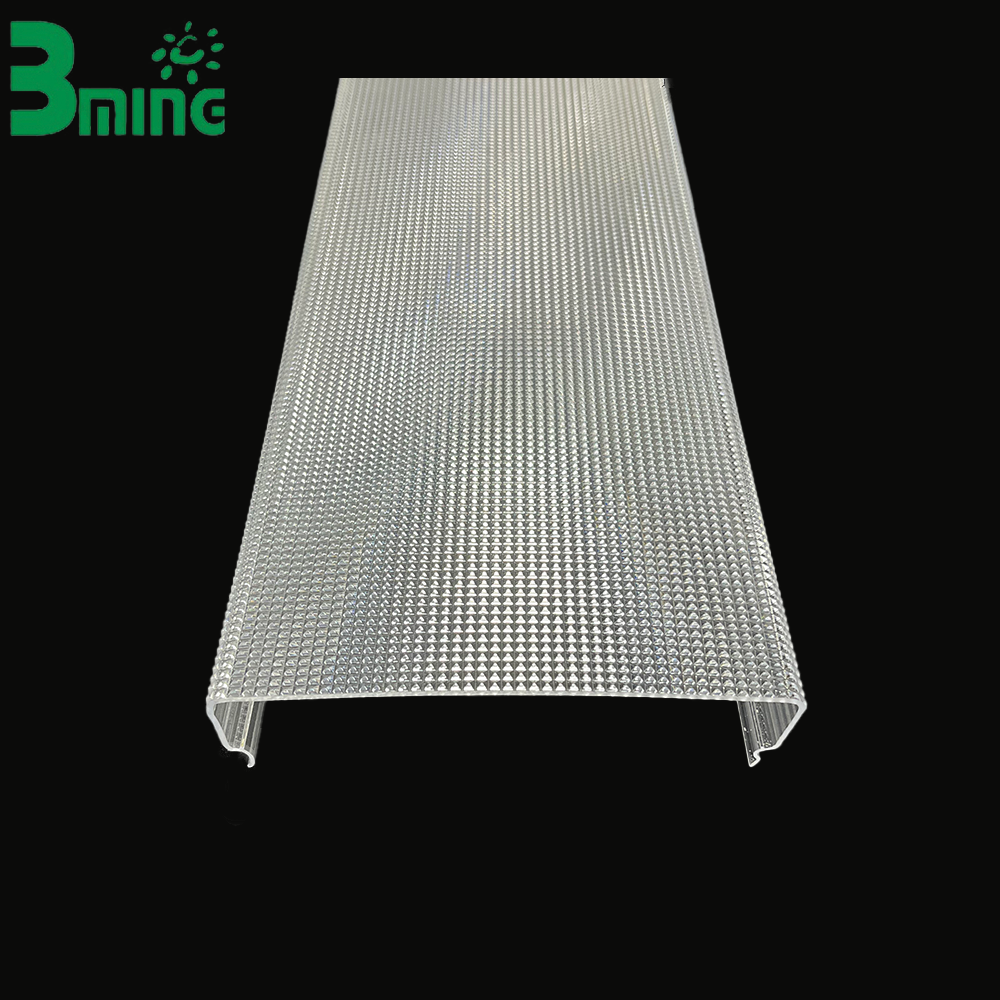
Prismatic and embossed diffuser profiles that control glare and shape the light distribution.
- Prismatic structures for controlled distribution
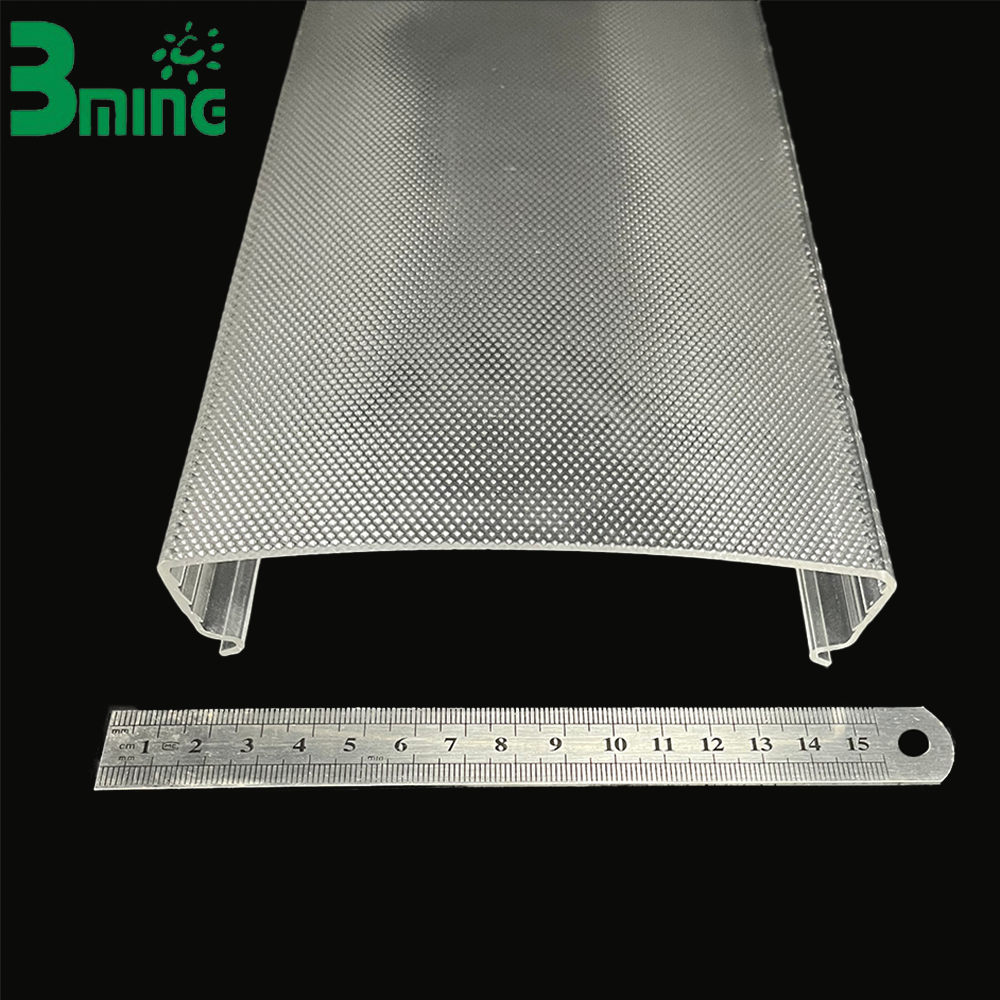
- Widths currently from 23 mm to 195 mm
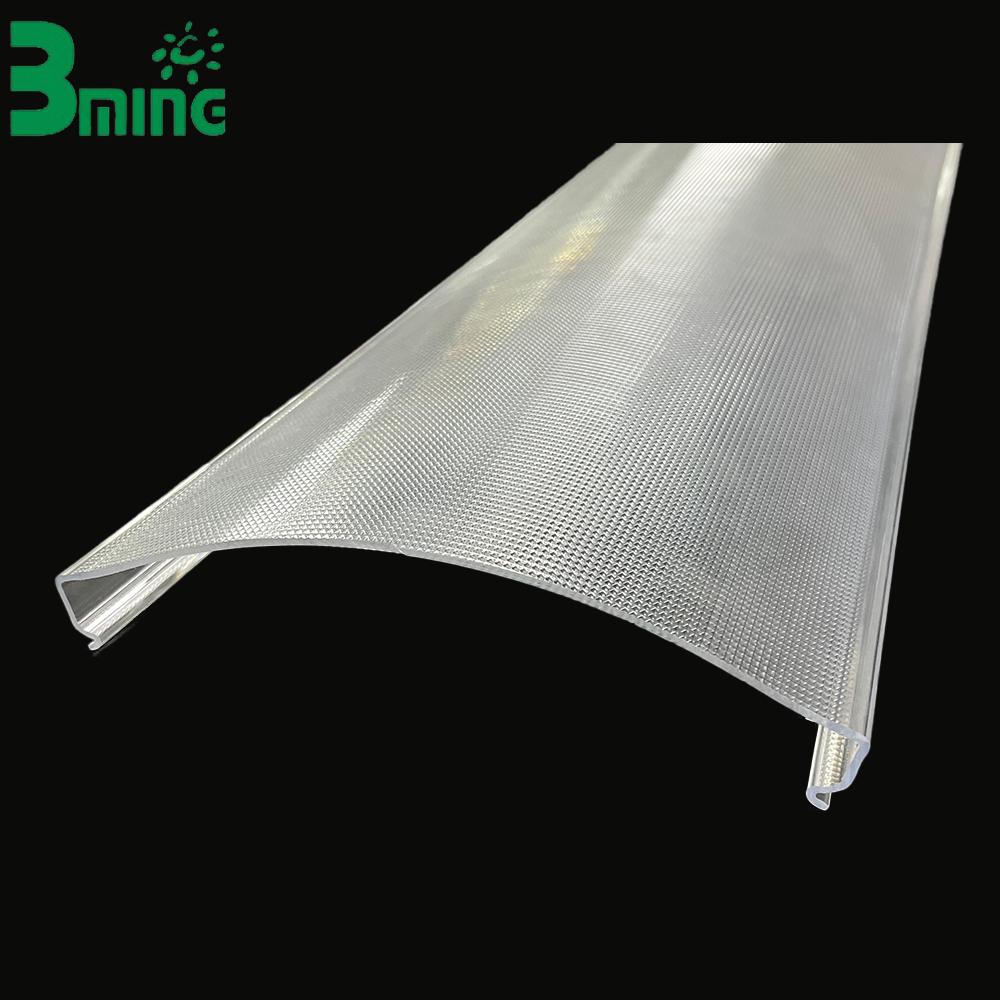
- Bending and forming available for shaped covers
Product Overview
Prismatic LED Diffusers Overview
A prismatic diffuser uses a structured surface — prisms, ribs or lenses — to redirect light rather than only scatter it. The result is a fixture that meets a glare requirement while keeping output high. We extrude prismatic profiles for troffers, panels and commercial fixtures, and we can bend and form them where the design needs a shaped cover. The prism geometry is cut into the die, so it stays consistent over long runs.
Specification
Typical specification
Values below describe current production capability. Custom values are quoted per drawing.
| Material | Polycarbonate (PC) / PMMA (acrylic), single-colour and two-colour |
|---|---|
| Light transmission | 0% to 97%, matched to the optical grade you specify |
| Profile weight | 10 g/m to 2,000 g/m |
| Colour | Clear, opal, frosted, custom colours including two-colour combinations |
| Surface | Gloss, frosted, embossed, prismatic, co-extruded |
| Length | Cut to length; standard and custom lengths |
| Tooling | In-house die design and die manufacturing |
| Quality system | ISO 9001:2015 certified |
Profile & Optics
Profile design, optical characteristics and surface finish
Profile design
Flat prismatic panels, curved prismatic covers and formed shapes.
Optical characteristics
Directional control with reduced glare at the viewing angle.
Surface finish
Precision prism structures, embossed patterns and combinations with frosted faces.
Customization
What we can change for your project
Profile
New cross-sections developed from your drawing or from an existing sample.
Dimensions
Width, height, wall thickness and length set to your fixture geometry.
Surface
Gloss, frosted, embossed, prismatic or co-extruded surfaces.
Colour
Clear, opal, custom colours and two-colour combinations.
Applications
Typical applications
Troffer lighting
Recessed luminaires with glare requirements.
Commercial lighting
Office panels and suspended fixtures.
Architectural lighting
Feature ceilings and coves.
Linear lighting
Continuous prismatic runs.
Industrial lighting
Low-bay fixtures with controlled distribution.
Decorative lighting
Textured decorative panels.
Signage lighting
Back-lit panels.
Cabinet lighting
Display case lighting.
Manufacturing Process
From drawing to packed profile
Drawing
2D drawing, 3D file, sketch or an existing sample.
Material
PC or PMMA, single-colour or two-colour, selected for optics, impact and UV stability.
Tooling
In-house die design and die manufacturing.
Extrusion
Trial run and parameter setting on a matched extrusion line.
Cutting
Cut to length, mitring, notching, drilling and CNC machining.
Inspection
Dimensional, appearance and optical checks against the approved sample.
Packaging
Protective film, sleeving, cartons and pallets to your requirement.
Quality Control
How the profile is checked
Every profile is produced against an approved sample or drawing. We check incoming resin, approve the first piece, measure the profile during the run, and carry out a final appearance and dimensional inspection before packing. Optical grades are verified for transmission and diffusion consistency.
- Incoming resin inspection and batch traceability
- First-piece approval against the approved sample or drawing
- In-process dimensional checks on profile width, height and wall thickness
- Light transmission and haze measurement on optical grades
- Appearance inspection under standard lighting conditions
- Final random inspection before packing and palletising
Related
Related products and applications
- Linear lighting
- Architectural lighting
- Commercial lighting
- Troffer lighting
- Industrial lighting
- LED strip lighting
- Cabinet lighting
- Signage lighting
- Troffer light covers
- LED light covers
- Prismatic diffuser guide
Need a diffuser built to your drawing?
Send us your drawing, sketch or existing sample. Our optical extrusion engineers will come back with material, tooling and price.
FAQ
Frequently Asked Questions
What does a prismatic diffuser do?
It uses a structured surface to redirect light, controlling glare and shaping the distribution instead of only scattering it.
Can the prism pattern be customised?
Yes. The prism geometry is machined into the extrusion die, so a custom pitch or angle can be developed for your photometric target.
Do you supply formed or bent prismatic covers?
Bending and forming are available where the design requires a shaped cover.
RFQ
Request a Quote for Prismatic LED Diffusers
Send the drawing, the material you prefer and your quantity. We answer RFQs within one business day.